Hi all. I just wanted to let anybody who's still reading this blog know that I'll be continuing to share learning opportunities and events on our IGGI blog from now on, and leaving this site up for archival purposes.
Continue to the IGGI blog by clicking on this link.
Thanks for reading, and I hope you'll stay in touch!
Melissa

#GovJamTO: Rocked the public sector on June 4, 5, and 6, 2013!
2013-10-07

2013-09-09
Meetup: Behavioural Economics
This was passed along to me by Tanya, one of our GovJammers. It strikes me as an interesting way to approach the observation stage in design thinking in a very hands-on and experimental environment.
Where: Future Bakery & Cafe, Bloor & Brunswick Ave. in Toronto
RSVP: Register through Eventbrite.
Behavioural Economics meetup
When: Tuesday, September 17, 7-9pmWhere: Future Bakery & Cafe, Bloor & Brunswick Ave. in Toronto
RSVP: Register through Eventbrite.
2013-09-03
Our next inter-gov meetup is this Thursday
In case you're not following on Twitter, or haven't joined IGGI yet, wanted to give people who still read this blog a head's up that our next meetup is this Thursday, September 5, starting after work at 5:30pm. Click here for all details, and to RSVP through Twitter.
2013-08-29
Co-production: Learning from Lucie Stephens (part 2)
As a follow-up to my last blog post, I wanted to share some more things I learned about co-production by meeting Lucie in person, and having the opportunity to chat with her. (For an intro on co-production, see my previous blog post.)
Lucie, Geraldine Cahill (from SiG at MaRS), Karen (our manager at CIWC), and I meet a few weeks ago after Lucie's session at MaRS. She had a number of great examples on how her organization, nef (new economics foundation), has successfully facilitated programs and co-produced solutions alongside the people who traditional services impacted. It was pretty thrilling to hear about those examples, because it indicates to me that we might be able to play with co-production in Ontario to solve some of our complex problems - like health care, poverty/homelessness, and climate change.
I asked Lucie a few questions, and thought I'd share some of her thoughts on them.
A: Put risk in its place. Lucie said that when nef goes in and helps facilitate a co-produced solution to something, they don't ignore that there's always a risk that things might go wrong. Rather, she turns the question of risk on its head by inviting officials to see firsthand the positive impact that co-produced solutions have on the people effected. I guess what she's saying is they effectively give officials stories to tell in case a bad news story emerges.
For example, in one place where people with dementia and mental illnesses were involved in co-producing a new kind of environment for their care, a press story came out saying that the government was making people with mental illness make their own tea, casting a negative light on what was traditionally a service that service providers delivered. In fact, the people at the residence - professionals providing services and the residents, too - found it was empowering and even good for the health of residents to set their own routine and do things like make their own tea. People with dementia, for example, were shown to benefit.
The more stories that officials can witness firsthand, the better they'll get at taking on the perceived risk of co-produced solutions.
A: It helps, but isn't necessary. Lucie said it's definitely easier to develop co-produced solutions when there's top-down leadership and support from officials/commissioners in charge of certain public service files. But where there's a need for it, and passionate practitioners on the ground, co-production will happen.
Lucie says co-production calls for policy-makers to do less in order to create the environment where co-production can thrive at the grassroots. Government should admit to itself that with a lot of these complex problems, it doesn't have all the answers; policy makers need to write public policy as a "discovery tool" - something that can be nimble and change/iterate, as needed.
A: No, and not necessarily! This one surprised me... Lucie said that it's not always a great idea for governments to lead these kinds of innovative approaches, reason being because, typically, officials in the government aren't close enough to the ground-level to really sense the passion and ability of the grassroots to affect change.
As well, co-production is very much a method/approach that depends on understanding and being in the local context. Lucie gave many examples where co-production worked in small environments. During her presentation at MaRS, she touched upon this point - she said that one of the challenges co-production faces is seeing how it might work on a bigger scale. There aren't really examples of co-production being used for big public programs, or services that effect masses of people, which governments typically deliver.
So many more questions than that... what do you think?
Lucie, Geraldine Cahill (from SiG at MaRS), Karen (our manager at CIWC), and I meet a few weeks ago after Lucie's session at MaRS. She had a number of great examples on how her organization, nef (new economics foundation), has successfully facilitated programs and co-produced solutions alongside the people who traditional services impacted. It was pretty thrilling to hear about those examples, because it indicates to me that we might be able to play with co-production in Ontario to solve some of our complex problems - like health care, poverty/homelessness, and climate change.
I asked Lucie a few questions, and thought I'd share some of her thoughts on them.
On risk
Q: How do you prepare ministers/people accountable for government programs for the potential bad press if something goes wrong?A: Put risk in its place. Lucie said that when nef goes in and helps facilitate a co-produced solution to something, they don't ignore that there's always a risk that things might go wrong. Rather, she turns the question of risk on its head by inviting officials to see firsthand the positive impact that co-produced solutions have on the people effected. I guess what she's saying is they effectively give officials stories to tell in case a bad news story emerges.
For example, in one place where people with dementia and mental illnesses were involved in co-producing a new kind of environment for their care, a press story came out saying that the government was making people with mental illness make their own tea, casting a negative light on what was traditionally a service that service providers delivered. In fact, the people at the residence - professionals providing services and the residents, too - found it was empowering and even good for the health of residents to set their own routine and do things like make their own tea. People with dementia, for example, were shown to benefit.
The more stories that officials can witness firsthand, the better they'll get at taking on the perceived risk of co-produced solutions.
On creating the conditions for co-production
Q: Is it fair to say that support for co-production depends on who's in power or who's elected at the time?A: It helps, but isn't necessary. Lucie said it's definitely easier to develop co-produced solutions when there's top-down leadership and support from officials/commissioners in charge of certain public service files. But where there's a need for it, and passionate practitioners on the ground, co-production will happen.
Lucie says co-production calls for policy-makers to do less in order to create the environment where co-production can thrive at the grassroots. Government should admit to itself that with a lot of these complex problems, it doesn't have all the answers; policy makers need to write public policy as a "discovery tool" - something that can be nimble and change/iterate, as needed.
On government as catalysts of co-production
Q: Do you have any examples where governments or government agencies are using co-production as a new method of service (co-)delivery? Should governments lead the way?A: No, and not necessarily! This one surprised me... Lucie said that it's not always a great idea for governments to lead these kinds of innovative approaches, reason being because, typically, officials in the government aren't close enough to the ground-level to really sense the passion and ability of the grassroots to affect change.
As well, co-production is very much a method/approach that depends on understanding and being in the local context. Lucie gave many examples where co-production worked in small environments. During her presentation at MaRS, she touched upon this point - she said that one of the challenges co-production faces is seeing how it might work on a bigger scale. There aren't really examples of co-production being used for big public programs, or services that effect masses of people, which governments typically deliver.
Thoughts? Ideas?
Our conversation left my head spinning with ideas... what if government re-defined what it means by service delivery? What if governments scaled down its idea of what its role and impact on people should be? How can government foster an environment, through public policy/law, that encourages co-produced solutions to complex problems?So many more questions than that... what do you think?
2013-08-22
Co-Production: learning from Lucie Stephens (part 1 of a series of posts)
A few weeks ago, I was invited to MaRS for a talk by Lucie Stephens about co-production. I'd never heard about co-production before, and I'd never heard of nef (new economics foundation) either. So I didn't know what to expect.
I was so inspired by Lucie's talk at MaRS, and I had the opportunity to meet up with her a few days afterwards to ask her some questions. I shared what I learned on our internal blog, and wanted to share them here, too. But first, I wanted to give a bit of an overview of co-production, and then get into what I've learned about it over the past few weeks.
Our team at CIWC has been exploring design thinking and other methods/processes for solving complex problems. Co-production is a way to design and deliver services for communities, with communities. Here's a bit of background on Lucie's/nef's definition of co-production.
As well, you can learn more about co-production on nef's website, and download this publication by nef that gives a more detailed overview of this method: Co-production - A manifesto for growing the core economy.
I will get into some examples of how co-production is being used, and some of Lucie's answers to our questions about co-production, in a follow up blog post.
I was so inspired by Lucie's talk at MaRS, and I had the opportunity to meet up with her a few days afterwards to ask her some questions. I shared what I learned on our internal blog, and wanted to share them here, too. But first, I wanted to give a bit of an overview of co-production, and then get into what I've learned about it over the past few weeks.
Co-production: a working definition
Our team at CIWC has been exploring design thinking and other methods/processes for solving complex problems. Co-production is a way to design and deliver services for communities, with communities. Here's a bit of background on Lucie's/nef's definition of co-production.
#coprodTO co-production: professionals & citizens share power to plan & deliver support together; both have vital contributions to make
— CreativeGov (@CreativeGov) August 20, 2013
Co-production is about empowering people who have a need for a service/program to co-design it alongside professionals (e.g., from the government), and co-deliver it as well. It's about sharing power, in the truest sense; rather than consulting at people and delivering a program to them, co-production seeks to build solutions alongside the people who need them, and build programs with them.Co-production - professionals + citizens sharing power and recognition in their roles designing and transforming quality of life. #coprodTO
— Jennie Faber (@jennie) August 20, 2013
Six elements of co-production
There are lots of things that might look like co-production, but nef has determined that when co-production is happening, these six elements are always present.- People as assets. nef believes there are three parts to consider in our economy: the environment, the financial markets, and (what's most abundant), people. The traditional sense of economics was based in scarcity; gold is scarce and therefore highly valued, but traditionally, people/human resources aren't valued as highly because they might not be as scarce. nef believes in focusing on people as what they call the core economy, and one of the principles behind it is that people all have something to contribute, and therefore should play an active role in the community's well being.
- Building on assets. Another principle behind co-production is building on our abundant assets (people), and finding the opportunities where they might make the best use of their skills. It's about leaving no one's talents behind.
- Mutuality. Co-production happens when there is a true partnership occurring between professionals and the end users of something. It's not a partnership in the traditional sense, where professionals (government) are still just consulting at people; rather, there's a true reciprocity of expertise and wisdom shared, and each person brings equal levels of value to the equation.
- Networks. Another element inherent in co-production is the ability to transcend boundaries - to work between networks and diverse populations to make sure that where linkages can be made, they are, so that the best outcome/service can be achieved.
- Blurring distinctions. This speaks, again, to mutuality, and goes a step further. Where in traditional service delivery models, the professionals develop and deliver services, in co-production, there might be solutions created where users are delivering services, too. There's a blurring of titles or traditional hierarchy in co-production where power is shared more evenly.
- Facilitating. Another important thing that happens in co-produced scenarios is that the participants are truly empowered to make decisions for themselves. In co-production, each user that's part of the system has a stake in the outcome, and if something were to go wrong, it's OK - it's a matter of coming back together and working out a solution.
As well, you can learn more about co-production on nef's website, and download this publication by nef that gives a more detailed overview of this method: Co-production - A manifesto for growing the core economy.
I will get into some examples of how co-production is being used, and some of Lucie's answers to our questions about co-production, in a follow up blog post.
2013-07-17
Design thinking learning opportunity by Exhibit Change
Just re-tweeted this as well - Exhibit Change (Jenn, from GovJamTO) has a couple of (paid) learning opportunities for design thinking, on August 21, and August 22-23.
From the website:
From the website:
Learn more & register at Exhibit Change's website.EdCamp BootCamp
This will be a one day training ALL about unconferences and facilitation. Unconferences are participant-driven, the content is created on the spot by the people who are in the room. This training will give an overview of a few different techniques and facilitation methods that can be used for EdCamps. Coming to EdCamp and meeting like-minded people is awesome and being able to facilitate when you get back to your place of work is equally as powerful.
EdCamp BootCamp is happening on Wednesday August 21st, 2013 with a social to follow.
Design Thinking for Impact
This will be a 2 day training on the design thinking process and working for social impact. Over the course of two days, participants will get the opportunity to learn design thinking, practice the process and to work with others on how they are bringing it back to their work places.
Design Thinking for Impact is happening on August 22nd & 23rd 2013.
2013-07-12
Growing the core economy - an opportunity for co-production
Our friends at Social Innovation Generation (SiG) @ MaRS have a great event coming up this upcoming Monday evening featuring Lucie Stephens, who will talk about co-production as a new way of thinking about public services. Here's the invitation we were sent.
When: Monday July 15, 2013, 5:30-7:00pmHope to see you there!
Where: MaRS, Auditorium, 101 College Street, Toronto
Cost: $25 - register through Eventbrite
Social Innovation Generation is very pleased to invite you to the next event in our Inspiring Action for Social Impact Series, to hear Lucie Stephens, the Head of Co-production in the Social Policy team at nef (new economics foundation). Join us on Monday, July 15, as Lucie describes co-production as a new way of thinking about public services.
Public services face great challenges: increasing demand, rising expectations, entrenched social problems and reduced budgets. Reform is not enough to overcome these―radical innovation is needed, and must move from the margins to the mainstream.
But what should inform this radical innovation?
Co-production has the potential to revolutionize how we deliver health, education, policing and other services, making them more effective, efficient and sustainable.
What is co-production? Co-production has been described as the means of delivering public services in an equal and reciprocal relationship between professionals, people using services, their families and their neighbours. Where beneficial activities are co-produced in this way, both services and neighbourhoods become far more effective agents of change. (Download Co-Production: A manifesto for growing the core economy by nef to learn more.)
Come learn more as Lucie presents this innovative methodology.
2013-07-08
Guest post - Cristian Contreras reflects on GovJam 2013
I have attended several hackathons in the past but none have been as focused on the big picture as GovJam. For two and half days, a group of public servants, social entrepreneurs, and government aficionados took to designing better public service systems in the hope of creating a better place to live. Thanks to my previous exposure to design thinking, I was familiar with the constructive chaos that characterizes the creative process between teams of relative strangers working on ideas at an embryonic stage. The creative tug-of-war from this multidisciplinary collaboration was as it always is - an incredibly rewarding experience.
The idea of improving the quality of public services by redesigning them to include citizen input was a recurring theme during GovJam. Our team was no exception. We decided to work on designing a revolutionary approach to citizen engagement that gives people an opportunity to shape their community by letting them vote on projects with real tax dollars.
In addition to creating more opportunities to participate, a relationship between education and engagement was also present in many of the projects. I, for one, echo both of these ideas. In my work with Next Parliament, I have learned that there is a very real need for a more participatory democracy, but I have noted that solutions to this need are being held back by lack of widespread political engagement. Often, lack of confidence in the system is cited as the reason for this growing political apathy, but in my opinion this is simply the go-to excuse. The real problem lies in the fact that the wider public needs to be much better informed about various issues affecting their lives.
Next Parliament is my attempt at fixing this problem. I have created a site dedicated to educating Canadians on every issue related to politics. Next Parliament works as a Wikipedia-style website where every entry can be edited by the community. Every issue and community recommendation has an argument in favour, an argument against, a community discussion thread, and links to more information. Visit NextParliament.ca to learn more.
We are privileged to be witness to a Cambrian explosion of innovative Gov2.0 initiatives taking place all around the globe. It can sometimes be easy to lose sight of these new government breakthroughs in the sea of cloud, crowdsourced, mobile, and other social innovations, but we must never lose sight of the fact that this space represents one of the most fundamental transformations of the digital era to date.
The idea of improving the quality of public services by redesigning them to include citizen input was a recurring theme during GovJam. Our team was no exception. We decided to work on designing a revolutionary approach to citizen engagement that gives people an opportunity to shape their community by letting them vote on projects with real tax dollars.
In addition to creating more opportunities to participate, a relationship between education and engagement was also present in many of the projects. I, for one, echo both of these ideas. In my work with Next Parliament, I have learned that there is a very real need for a more participatory democracy, but I have noted that solutions to this need are being held back by lack of widespread political engagement. Often, lack of confidence in the system is cited as the reason for this growing political apathy, but in my opinion this is simply the go-to excuse. The real problem lies in the fact that the wider public needs to be much better informed about various issues affecting their lives.
Next Parliament is my attempt at fixing this problem. I have created a site dedicated to educating Canadians on every issue related to politics. Next Parliament works as a Wikipedia-style website where every entry can be edited by the community. Every issue and community recommendation has an argument in favour, an argument against, a community discussion thread, and links to more information. Visit NextParliament.ca to learn more.
We are privileged to be witness to a Cambrian explosion of innovative Gov2.0 initiatives taking place all around the globe. It can sometimes be easy to lose sight of these new government breakthroughs in the sea of cloud, crowdsourced, mobile, and other social innovations, but we must never lose sight of the fact that this space represents one of the most fundamental transformations of the digital era to date.
2013-07-03
Last day to register - Human-Centered Design course by IDEO/Acumen
Thought some of you might be interested in this Human-Centered Design (HCD) for Social Innovation course being offered for free this summer by IDEO and Acumen. The registration deadline is today.
The course is five weeks long, and will take about 4-5 hours per week of your time. HCD is at the heart of design thinking, the same methodology we loosely used during GovJam (and based on our Jammers' post-event feedback, it sounds like people wanted to learn more about the process, so here's a good opportunity!)
I hope some of you are able to take advantage of this opportunity!
The course is five weeks long, and will take about 4-5 hours per week of your time. HCD is at the heart of design thinking, the same methodology we loosely used during GovJam (and based on our Jammers' post-event feedback, it sounds like people wanted to learn more about the process, so here's a good opportunity!)
To register, you need to sign up with at least one other person and form a team; ideally a team has 4-5 people on it.Course Description
"Human-Centered Design for Social Innovation is a five-week course that will introduce you to the concepts of human-centered design and help you use the design process to create innovative, effective, and sustainable solutions for social change. No prior design experience necessary."
I hope some of you are able to take advantage of this opportunity!
2013-06-26
Post-Jam reflections
Thanks to all who were able to attend our post-Jam reflections meeting in the wee hours this morning (ok, 9am isn't exactly "wee" but seriously, who has a meeting at 9am??). With a last-minute venue change due to our home building being shut down (generator/power failure yesterday), I wasn't sure everyone would still be able to attend. Thanks for being so flexible.
You might have noticed a couple of new links on the sidebar of this blog. I've created a post-Jam links section for lessons learned from GovJam Toronto to share with all of you, as well as anybody who might want to attempt a Jam in the future.
P.S. - why not sooner than later? Come to our meetup tonight!
You might have noticed a couple of new links on the sidebar of this blog. I've created a post-Jam links section for lessons learned from GovJam Toronto to share with all of you, as well as anybody who might want to attempt a Jam in the future.
- Read the ideas we were able to come up with at the meeting this morning. We brainstormed some solutions/ideas around several topics that came out of the post-event survey I sent out a couple of weeks ago.
- Read the raw data/comments we received from participants. This was feedback we got from the SurveyMonkey (names/email addresses have been removed).
P.S. - why not sooner than later? Come to our meetup tonight!
2013-06-21
Next inter-gov meetup: Wed. June 26
I just sent out invites to Jam participants for the next inter-gov meetup. Venue: Elephant & Castle on King Street.
Two ways to RSVP:
Two ways to RSVP:
- RSVP to the invite I sent
- RSVP with your Twitter account via the Tweetvite link
2013-06-19
Post-Jam Surveys!
I'm not sure how many of you are still checking this blog (or our @CreativeGov Twitter account), but I sent out two surveys to your inboxes recently.
- The first was from Katrin, who led GovJam Berlin. She's also a PhD candidate, and is doing some targeted research to public sector employees. If you're from the public sector and want to participate, click here to fill out the survey. It took me about 15 minutes to complete.
- The second was from me, and links you to a quick 5-10 minute survey to gather a few thoughts around how GovJam Toronto went. It also asks you to RSVP to a post-Jam reflections meeting scheduled for next Wed., June 26, 9-10am. We need your response from the survey to know whether to send you the meeting appointment, so here's a link to the survey in case you missed it. You can also email me if you don't want to fill out the survey but want to attend the meeting.
2013-06-12
Wrap-up: GovJam Toronto 2013
It's been difficult for me to start putting into words all the things I learned and all the things we experienced while organizing and participating in GovJam Toronto. Since we wrapped up with our after-party last Thursday, I've done a lot of catching up on sleep. And now that my brain is somewhat rested, maybe I can articulate a few highlights from the event.
 * In Real Life
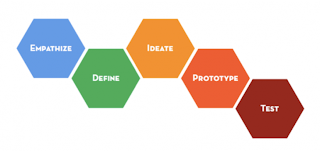
I think one of the most valuable things that came out of GovJam was putting design thinking into practice. We didn't have a lot of time to teach all the different components of the design thinking method, but we did try to emphasize empathy (and there was a lot of testing and prototyping and ideating going on, even if people didn't realize it). Good service design starts with understanding the user, and teams did a great job designing prototypes around people. Some went out on the street and tested their concepts with potential users; some called people up and brought them to the Jam to provide their feedback/experiences; some used social media like Twitter to ask questions. We organizers also had a roster of Advisors and Judges who were generous with their time and provided feedback to teams as they developed their prototypes. This helped them get a fresh perspective and build even better designs.
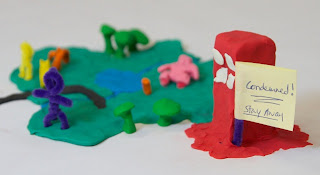 There was a lot of pressure on everybody at GovJam Toronto to not only meet deadlines, but create something amazing. I observed a lot of human emotions at the Jam: frustration and epiphanies, annoyance and happiness, and everything else in between. But I think I can confidently say that everybody who spent time at the Jam had fun. This reinforces, to me, that you can have fun and be incredibly productive at the same time. In fact, I think we need to have more fun in the OPS to really unlock our creative potential.
Author's note: There will be a more formal feedback mechanism (survey, maybe, and/or meeting) sent out to all participants/facilitators at some point.
Design Thinking IRL*

I think one of the most valuable things that came out of GovJam was putting design thinking into practice. We didn't have a lot of time to teach all the different components of the design thinking method, but we did try to emphasize empathy (and there was a lot of testing and prototyping and ideating going on, even if people didn't realize it). Good service design starts with understanding the user, and teams did a great job designing prototypes around people. Some went out on the street and tested their concepts with potential users; some called people up and brought them to the Jam to provide their feedback/experiences; some used social media like Twitter to ask questions. We organizers also had a roster of Advisors and Judges who were generous with their time and provided feedback to teams as they developed their prototypes. This helped them get a fresh perspective and build even better designs.
Making connections
When we invited people to participate in the Jam, we reached out to both internal and external networks. It was amazing to see all these worlds come together... I founded an inter-governmental network about a year ago, and it was personally gratifying to see some of the people on that network connect with other public servants who they might never have gotten to know otherwise. I'm sure that being stuck in a room with the same people, working on a common, wicked problem over an intense 48 hour period has forged some new professional relationships and opportunities for Jammers!Event planning, redefined
I've had experience planning events in some way or another ever since I got into corporate communications more than six years ago. But the most different sort of event I'd planned before GovJam was an unconference. The Jam was a whole new thing all together because there's no template or similar process to follow. Planning a Jam requires a little design thinking in itself. Thankfully, I had colleagues who have a design thinking background to help me out. Nisha was instrumental at helping me sort out a lot of the details. Not too long after we decided to plan the Jam, she participated in a Charrette, and both of us participated in Global Service Jam. With this new perspective, we were able to plan an event that brought the best from both worlds.Fun!!

What's next?
We have a lot of post-Jam feedback-gathering, learning, and reflection to do. And I hear Global Sustainability Jam is coming up in November... In the meantime, I'm sure that people who participated at GovJam will bring design thinking techniques they used at the Jam back into their work. And who knows; maybe we'll see a couple of the prototypes go forward in real life :)What'd you think?
I hope some of you who joined us at GovJam Toronto have some thoughts to share... anything surprising or unusual about the Jam? Anything interesting or frustrating? Leave a comment below!Author's note: There will be a more formal feedback mechanism (survey, maybe, and/or meeting) sent out to all participants/facilitators at some point.
2013-06-05
brain... overload...
So... how does everybody feel after two days of the Jam??
A little bit exhausted and a little bit wired? A little bit anxious and a little bit excited? A little bit confused and a little bit inspired?
You're not alone... it's been an intense couple of days, and the #GovJamTO teams are doing great. There have been moments of insecurity and doubt, but I've also see some brilliant ideas come together in prototypes that teams have taken to the streets to gather feedback, test, analyze, and strengthen.
Today, we were fortunate to have a few Advisors in the room to give teams the critical feedback they need to better design their services. I listened in on so many great discussions, and saw each participant play a leadership role to build on others' ideas... lots of talking, but also lots of doing today.
Tomorrow marks the end of GovJam. We've got a panel of Judges scheduled to give some final thoughts and advice to teams after they demonstrate their concepts to the group. But even though we wrap-up the Jam soon, it's not the end of the many connections we've made, and hopefully, it's not the end of the prototypes teams design. I'm hoping some teams continue the conversation on our ideas site and find ways to build their prototypes towards implementation.
Looking forward to see the concepts finalized and demonstrated tomorrow after 3pm... see everybody soon!
P.S. continue updating your concepts on the GovJam.org headquarters site! Check out what the rest of the world is doing, too... so many cool ideas!
A little bit exhausted and a little bit wired? A little bit anxious and a little bit excited? A little bit confused and a little bit inspired?
You're not alone... it's been an intense couple of days, and the #GovJamTO teams are doing great. There have been moments of insecurity and doubt, but I've also see some brilliant ideas come together in prototypes that teams have taken to the streets to gather feedback, test, analyze, and strengthen.
Today, we were fortunate to have a few Advisors in the room to give teams the critical feedback they need to better design their services. I listened in on so many great discussions, and saw each participant play a leadership role to build on others' ideas... lots of talking, but also lots of doing today.
Tomorrow marks the end of GovJam. We've got a panel of Judges scheduled to give some final thoughts and advice to teams after they demonstrate their concepts to the group. But even though we wrap-up the Jam soon, it's not the end of the many connections we've made, and hopefully, it's not the end of the prototypes teams design. I'm hoping some teams continue the conversation on our ideas site and find ways to build their prototypes towards implementation.
Looking forward to see the concepts finalized and demonstrated tomorrow after 3pm... see everybody soon!
P.S. continue updating your concepts on the GovJam.org headquarters site! Check out what the rest of the world is doing, too... so many cool ideas!
2013-06-04
What to bring to the Jam
Mostly, bring yourself, an open mind, and ability to build (and not talk)... but you will need the following.
Required (at least one of each item required per team)
- Laptop (Note: we will have 5 or 6 government-issued laptops on hand and will provide these to teams for the WiFi connection.. but if you have any fancy programs/apps you need access to in order to build prototypes, please bring them!) tablet, phone, flash drive, etc.
- Cords, cables and dongles for charging/uploading your work
- Camera for photos, video recording (a tripod, if you have one, is helpful, too)
- Pens, markers, sketch book or notebooks
- Water bottles, reusable mugs/cups (go green!)
- Business cards
Prototyping Materials
What is a Prototype? A prototype serves to provide specifications for a real, working system rather than a theoretical one. For example, a prototype can be a physical item (new device, adaptations of existing things); a recording of actors showing how a service might be executed; a clickable interface; a paper storyboard/sketch where test users can touch or indicate what they want to do.So bring materials like...
- Old magazines and newspapers
- Legos, Play-Doh, Barbies (toys make great tools for prototyping!)
- Hats, glasses, wigs, clothes, and everyday items (also great tools for prototyping! Think about role play and acting out a user experience...)
- Aluminum foil, plastic wrap
- Popsicle sticks
- Cardboard boxes, box cutter, scissors
- Markers, pens, crayons (things for sketching and drawing)
- Containers of all shapes and sizes, any material
- Velcro tape, glue guns, wire, tie wraps, safety pins (things for attaching parts)
- Whatever you can think of - be creative!
Other things to do ASAP
Sign up for GovJam HQ!If you haven't already, please create an account with the GovJam Headquarters. You will need to log into this site, join the Toronto Jam, and create project teams here. You'll also upload (early and often!) all your sketches, notes, photos, and other supporting documents/materials to this page.
Sign into GovJam's ideas platform & keep a tab open for it!
You should be sent an invitation to join the site by tomorrow morning. Sign in and put in a brief description of your proposed solution to your challenge question, once you have it. (Tip: Use the Project Brief info to describe your solution - it should be complete by end of day tomorrow).
We'll use this site during the Jam, and after the Jam, to continue building on the prototypes teams come up with.
That's it! See you all again soon.
IMPORTANT: sign up for GovJam HQ
GovJam.org is open for registration
Sign up and join our Toronto Jam through the GovJam HQ website.This is where everyone across the world will be uploading sketches, photos, and other supporting materials for their prototypes. Bookmark it, and upload early & often to the site throughout the Jam.
Participants at GovJam Toronto will also sign up for OPIN's ideas platform. You will receive instructions at the kick-off tonight.
See you all soon!
2013-05-28
Get ready to Jam!
We're one week away 'til the first ever GovJam Toronto! My life is lists this week... organizers are caught up in confirming details and keeping track of lots of little things to get ready.
That's it for now - look forward to meeting everyone!
Edited 05/29: Less acronyms & more to the point. And sorry for all the hashtags!
What can you, the participants, do to prepare?
- Read the GovJamTO Guidebook. It's not very long, and full of helpful information for the Jam. (Download it by clicking on "File" and then "Download.")
- Start tweeting about it. Follow the global hashtag, #GGovJam, and please also attach the #GovJamTO hashtag when talking specifically about Toronto's event.
- RSVP for the after-party. The after-party follows the last day of the Jam on Thursday, June 6. We need your RSVP to know where to have it (either a small, cozy corner of a pub, or bigger space in a pub... [rest assured, it will be a pub. :p]). So RSVP to the Tweetvite invitation, or email me to let me know you're planning to come.
That's it for now - look forward to meeting everyone!
Edited 05/29: Less acronyms & more to the point. And sorry for all the hashtags!
2013-05-13
Three weeks til the Jam!
We're just finalizing all the details for GovJam Toronto. Lots of little things to work out, but it will all come together in time for the event on June 4, 5 and 6.
Edit: If you wanted to attend GovJam Toronto this year and couldn't get in, why not start your own Jam?? I've been sent a note from Adam at GovJam HQ, and he says great Jams have been planned in a few days! You don't need to have a big event... you can even do a mini-jam with a smaller group.
Visit the GovJam HQ site to learn how to host your own Jam, or contact me and I'll connect you to Adam.
We'll have more updates in the coming weeks and will send an email through Eventbrite to participants. Watch the blog and your inboxes.
Small venue update
- June 4: We're still set to meet at the Superior Room at Queen's Park, 900 Bay Street, for 5pm registration.
- June 5 & 6: We've added another room for days 2 and 3, since the room we initially booked won't fit all 60ish of you. So we'll be working out of the Windsor Room and the St. Catharines Room at 222 Jarvis, both located on the lower level. Note that we'll give all your names to the Security Desk, but you will have to check in before you enter.
GovJam Toronto is Sold Out!
We sold out a few weeks ago, but I just wanted to note that we've restricted the waiting list to 10 (which is also filled up). I'm so amazed by the response we got!Edit: If you wanted to attend GovJam Toronto this year and couldn't get in, why not start your own Jam?? I've been sent a note from Adam at GovJam HQ, and he says great Jams have been planned in a few days! You don't need to have a big event... you can even do a mini-jam with a smaller group.
Visit the GovJam HQ site to learn how to host your own Jam, or contact me and I'll connect you to Adam.
Other small updates
We're meeting with our Facilitators this week to prepare them to lead the teams. We're also meeting with our Advisors, who will be around on days 2 and 3 to offer their expertise and feedback on your prototypes.We'll have more updates in the coming weeks and will send an email through Eventbrite to participants. Watch the blog and your inboxes.
2013-04-22
Who's Jamming with us?
Since we're nearly sold out of tickets for GovJam T.O., I figured I'd start a blog post for participants to use to introduce themselves, if they want to.
So to make this a bit interesting, try to include:
One thing I'd like the government to change is the way it approaches problem solving. I think we shouldn't isolate ourselves and try to figure stuff out on our own, behind closed doors; we should build more nimble solutions openly alongside our peers as well as the people our services will impact the most and refine them constantly to meet users' needs.
So what are you all about? Hope to hear from some of you!
So to make this a bit interesting, try to include:
- What's your work or school background, and/or mission in life?
- What's one thing you'd like the government (any level) to change in the way it serves its publics?
One thing I'd like the government to change is the way it approaches problem solving. I think we shouldn't isolate ourselves and try to figure stuff out on our own, behind closed doors; we should build more nimble solutions openly alongside our peers as well as the people our services will impact the most and refine them constantly to meet users' needs.
So what are you all about? Hope to hear from some of you!
2013-04-15
Venue confirmed for GovJam Toronto
Just a quick update - the event venues have been confirmed. We're kicking off the event in one location, and will Jam for two full days at another.
It's still fairly far away, but if your plans change, do let me know as soon as you can so we can get some wait-listed people into the room.
Thanks for your patience, and you'll be hearing from us soon!
- June 4: Meet at the Superior Room at Queen's Park, 900 Bay street, Toronto. Registration starts at 5:30pm and kick-off goes until 8pm.
- June 5 & 6: Check in at 222 Jarvis St., Toronto. Registration starts at 8:30am and the Jam goes until 5pm each day.
It's still fairly far away, but if your plans change, do let me know as soon as you can so we can get some wait-listed people into the room.
Thanks for your patience, and you'll be hearing from us soon!
Subscribe to:
Posts (Atom)